

Hot Fuss in the Chill
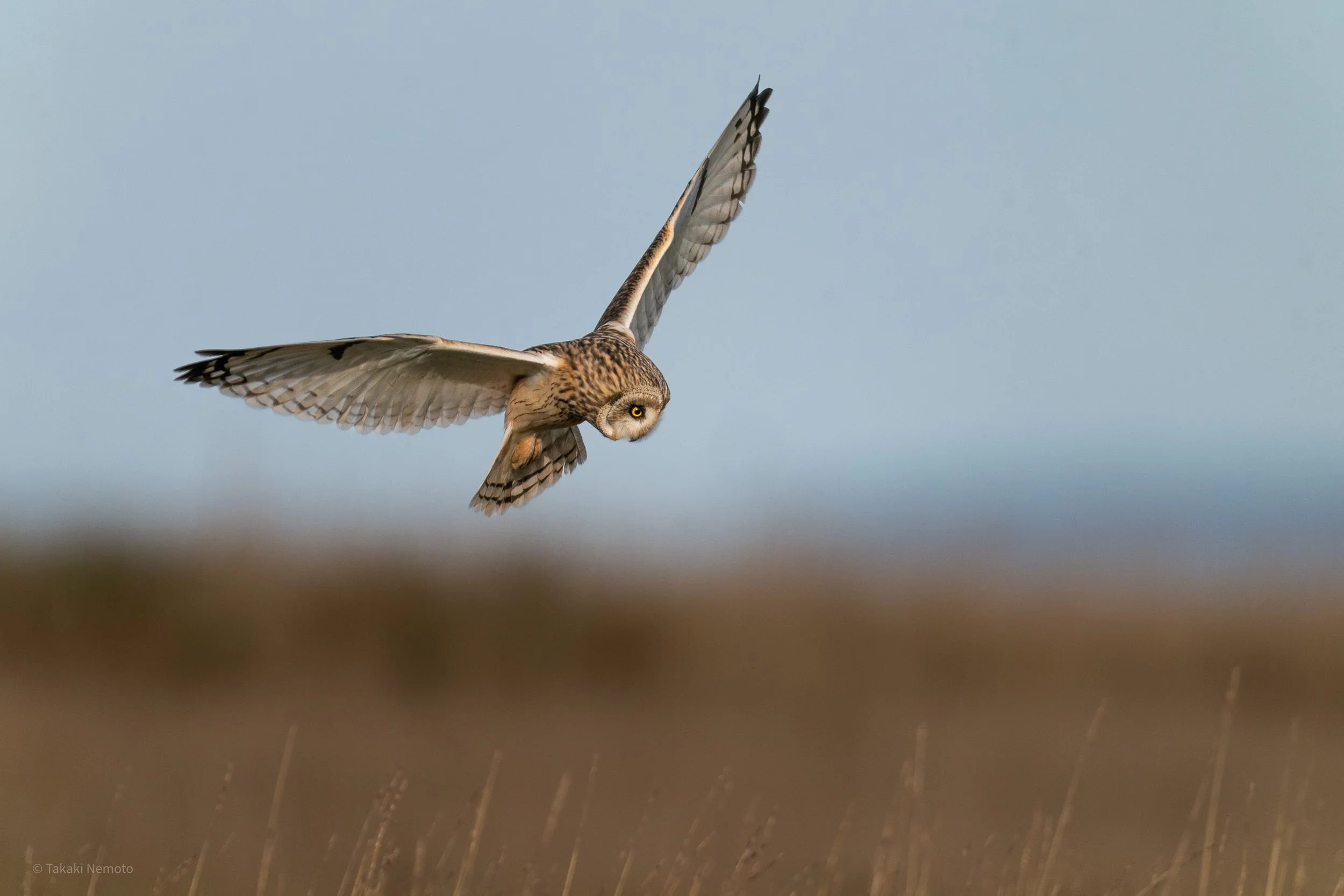
A short-eared owl hovers momentarily, tilting its face trying to hear its prey better.
Each winter, I become anxious to see a particular type of bird to arrive on our shores - the short-eared owl.
The reason is quite simple - here in the south west of Britain, they are not resident all year around. They’d come only when certain conditions are perfectly aligned. A harsh winter in Scandinavia being one of them, for example. The right wind direction, definitely. There also needs to be a plenty of food for them when they arrive here, particularly voles - otherwise there’s no point in them migrating such a long distance.
The incessant rain and a chain of endless storms from the Atlantic hitting the south west causing widespread floods this winter meant we rarely had reliable sightings of this magnificent bird - until January which is quite late. Rather than immediately hitting the road, I had to rein in my enthusiasm because the worse-than-usual British weather in the winter of 2026 meant it rained almost everyday therefore, requiring patience looking for the briefest of a pause, if at all, in the non-stop wet weather.
Visiting a new location looking for owls feels like visiting a casino for the first time. That’s my guess as I don’t gamble but what I mean is it’s impossible to know where you might hit the jackpot. Normally during the day, owls are hunkered down, hiding in the long grass, or perched well-camouflaged against thick shrubs. Unless you are a very diligent birder who braves the bad weather day in day out, and checks where they drop to roost the night before, you’ll never know where they might be. Faced with vast undulating fields with dips and ridges, I feel hopeless. All I have is some knowledge from my previous experience of photographing short-eared owls in different places. What sort of spots they’d prefer, and what sort of field they’d prefer to hunt in, those kinds of things. I try to look for such similarities in this new site.
‘Indecisive’ is my middle name at most times, but I finally pick a spot. Just by the bottom of a huge clump of long grass so as to hide my silhouette. Besides, the spot commands an unobstructed view of an open field with some small grassy spots that a short-eared owl might quarter looking for its prey. But seriously, it’s anybody’s guess where they might fly and hunt.
Just as I start walking towards it, something dark and certainly bigger than a crow leapt up from the long grass without a sound - a shortie.
I immediately felt bad for flushing it - I was close to a footpath, and the intention was to hide myself, sit still and wait for one to start hunting on its own accord.
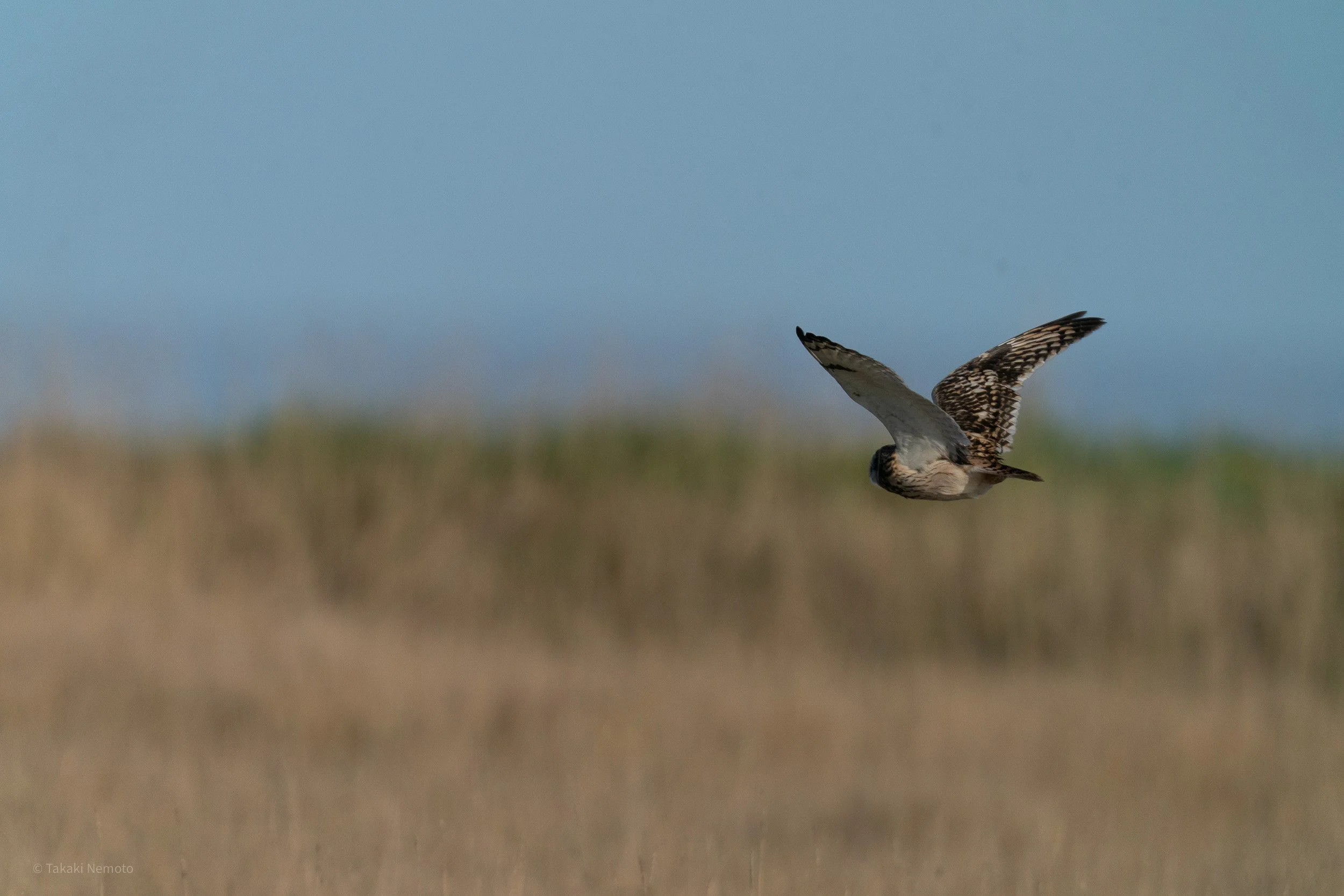
A typical ‘bad’ bird photo where you flushed the bird. A bum shot it’s called for an obvious reason.
But, any hint is welcome and now that it’s shown itself, I simply follow it with my eyes and take note of roughly where it’s landed although its exact spot is invisible because it’s landed on the other side of a high embankment. Anyway, the game is now on.
Two hours have passed since I flushed the bird by accident. I’m still in the same spot, waiting for the bird to take to the sky. But no sign, no movement. The thing is, I still can’t even see it because of the embankment. It might have moved sideways, or even flown off completely hidden thanks to the landscape. I don’t want to approach it in case I flush it again though. I start to lose confidence wondering if it really was a shortie or something else I thought I saw.
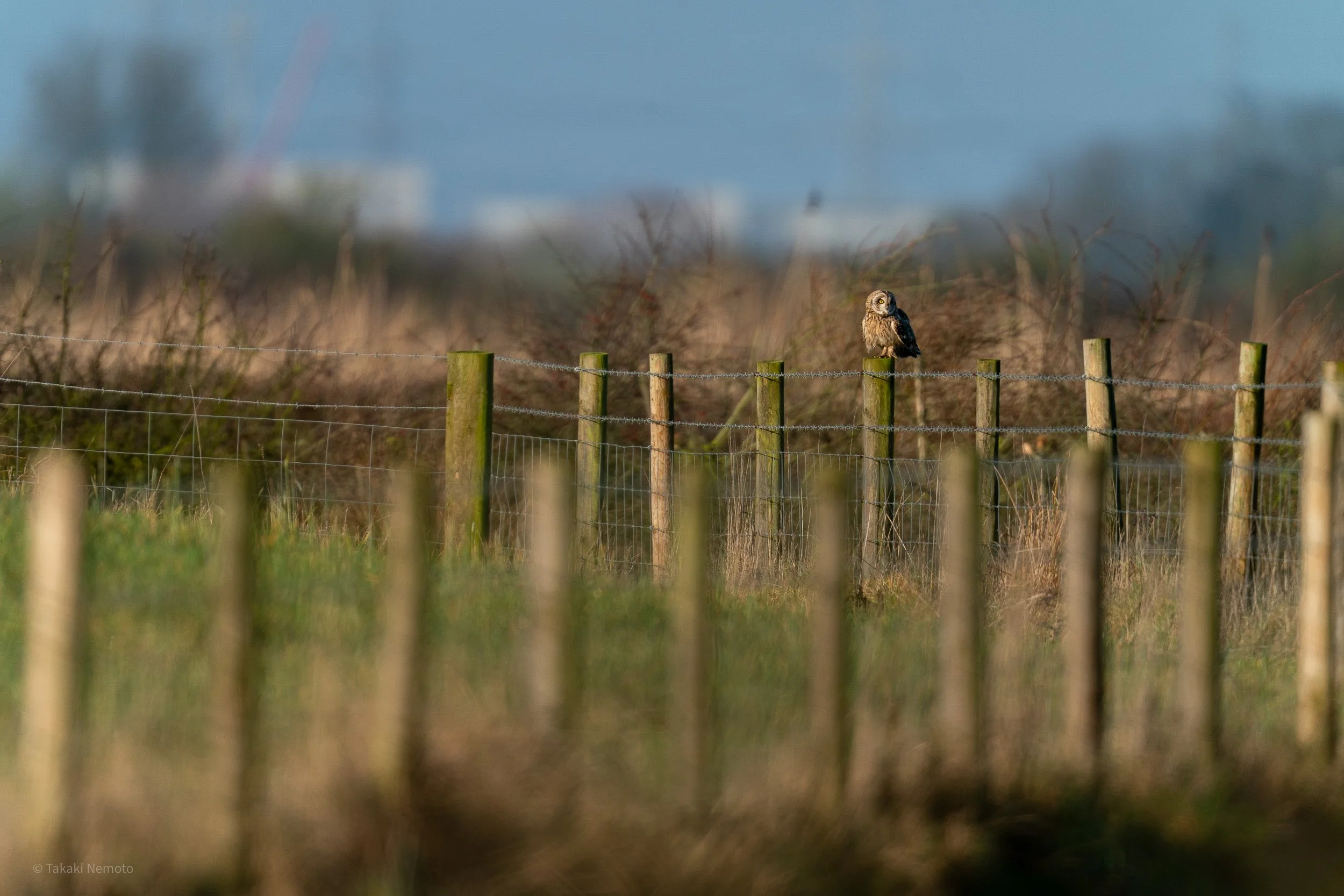
Although obvious when photographed like this, a short-eared owl, despite its large size, is a master of disguise when perched on fence post when there are hundreds, maybe thousands of them!
Wildlife photography, contrary to common belief, reveals a lot about human nature. When you come to a hot spot, initially there’s secrecy in the air. Covert competitiveness amongst the photographers. People are not willing to share information. They avoid eye contact. There are some regional differences but you can bet there’s the air of ‘Don’t ask me as I won’t tell you.’ attitude.
But as the waiting game becomes long and the photographers inevitably bored, they lose confidence and start becoming friendly with each other seeking either reassurance or commiseration or both. That’s how I was approached by a group of photographers who had been waiting not far from me. I must say it is a nice distraction to have when you are also nearly crushed by self-doubt. Together we strolled to other areas of the site stopping off at vantage points to see if we can spot other owls flying elsewhere on the reserve. As it turns out, this brief gathering yields nothing apart from the confirmation that this elusive owl is for real and is currently hidden from sight. Then they decide to try other spots and I decide to go back to the original spot alone. A high-risk strategy, as having more than two eyes is always better, and the FOMO - fear of missing out - can be too much to bear.
I try to find a slightly more comfortable crouching position back at my spot. It’s more difficult than you’d imagine after a long spell of relentless rain in an already marshy field. Even a foldable picnic chair would have been a disaster as you would sink deep into the soggy soil soon. I’ve managed to find a relatively dry point raised from the boggy ground by vegetation and steadied my bag on it and crouched holding my lens as if it were some sort of new yoga pose to strengthen my core, wishing the owl would appear soon to put me out of this self-inflicted misery.
After a couple of false alarms (your eye is fooled by any flying object by this point…), I spot a shortie appearing from the top of the embankment nonchalantly.
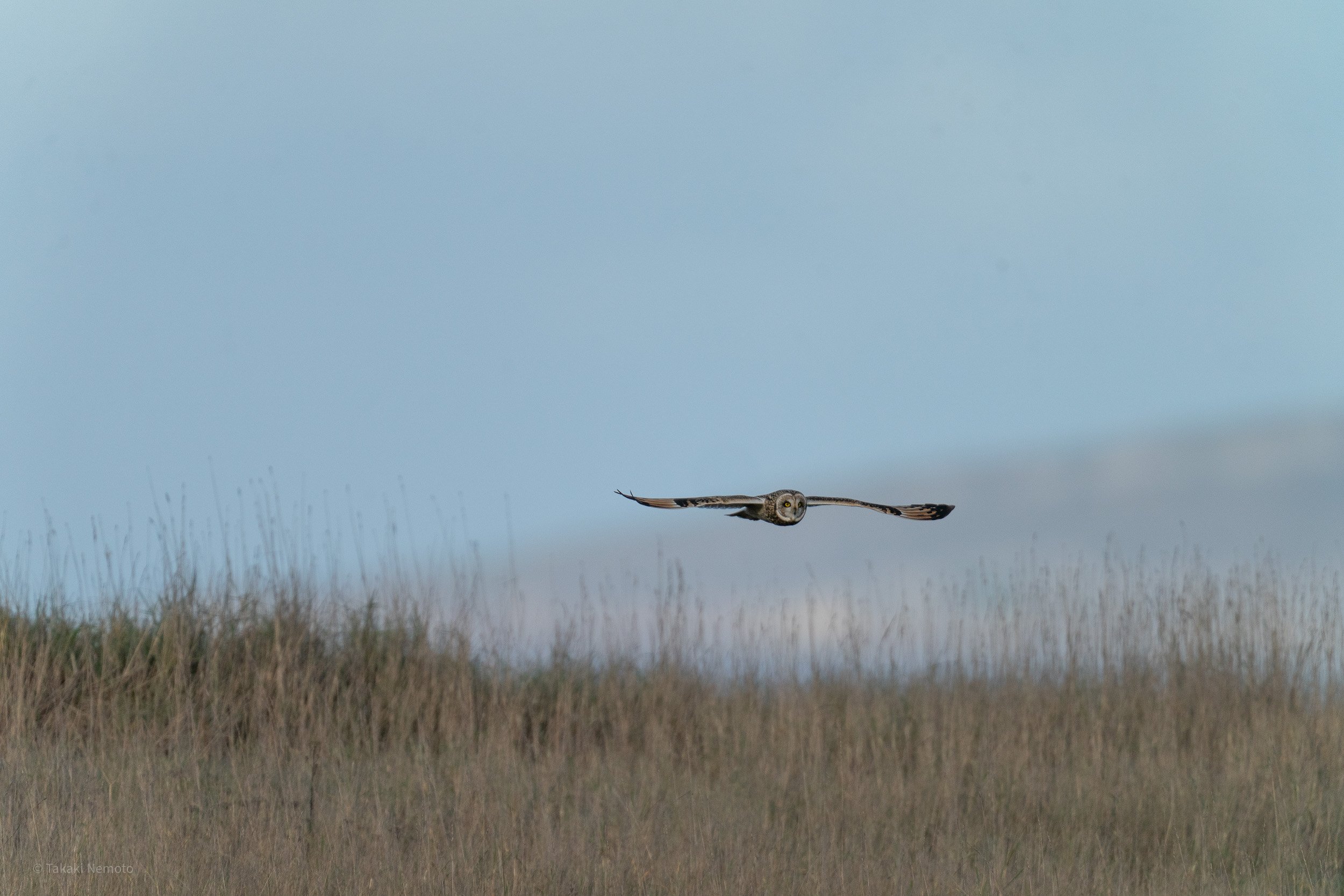
‘Been waiting for me?’ Such a tease.
The colours of their plumage blend into the habitat just as effortlessly as their flight. As I frantically steady the lens following the owl’s flight path, the camera suddenly betrays me, by shifting the focus away from the bird to the grass just to irritate its owner for fun.
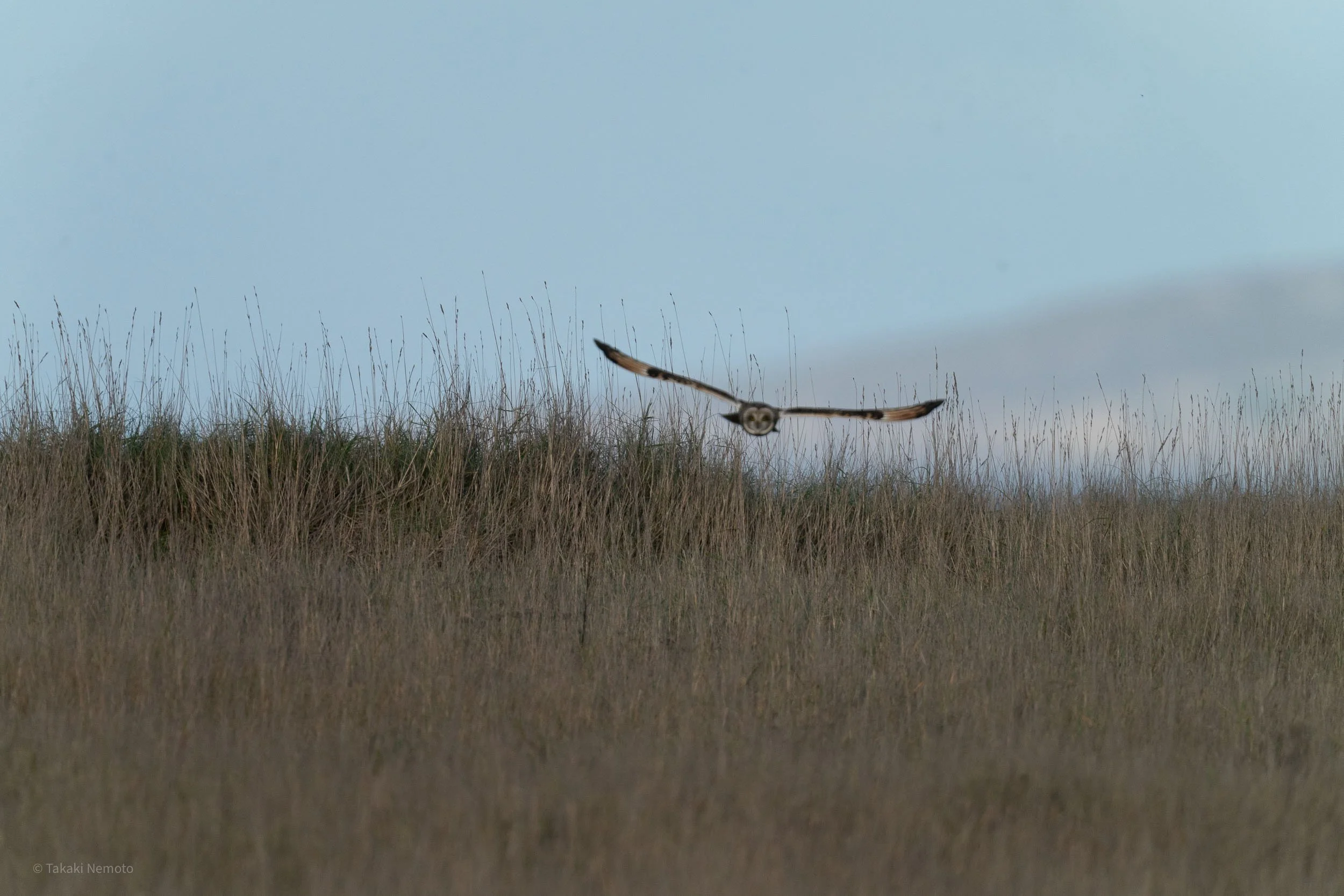
‘The intelligent AF knows exactly what you want to focus on…..NOT!’
There’s no luxury even to curse in a scene like this as the bird’s appearance might only last a matter of seconds. I released my thumb from the AF button, only to ram it again as if to tell off my camera for the last action, hoping that it would correctly focus on the owl. Nothing is more frustrating than the camera refusing to see what you can see. It’s not that I thought this would make a fantastic shot. Far from it. It’s just that I knew from experience that unless the camera focuses on the subject now, at this sort of size in relation to the frame, the camera will definitely struggle to see the bird as it comes closer to the lens shortly after. Alas, in situations like this, my camera, although once worshipped as ‘game-changer’ shows its age. 7 years to be exact.
The bird banks to the left and I shift myself to remain parallel. When I almost expect the bird to fly out of the frame, it decides to fly back towards me, perhaps because it heard some voles I cannot hear.
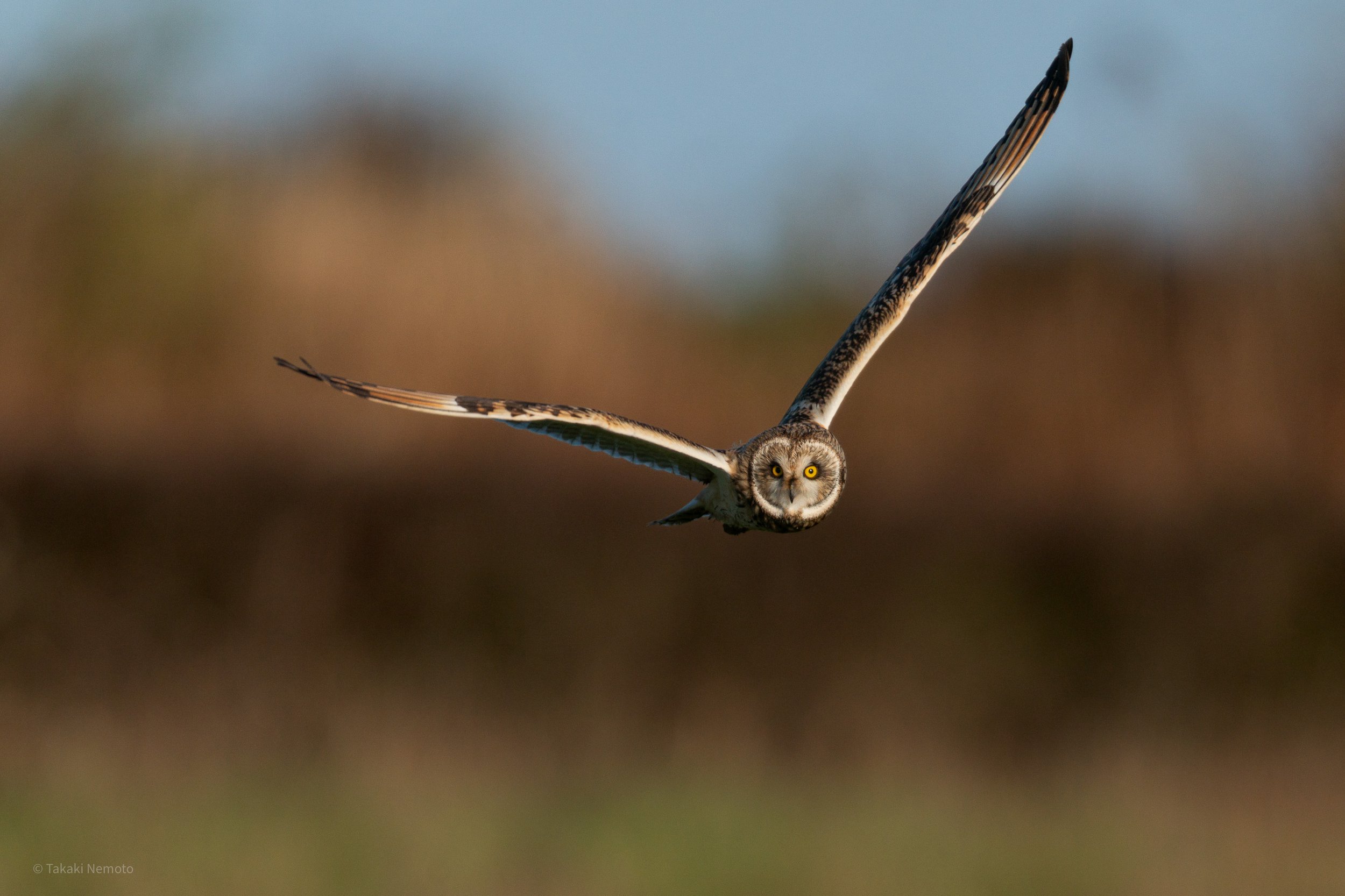
This turning posture is always cool, I think.
With a determined look on its face, it quarters the field, tilting its facial disc to pinpoint the voles more closely.
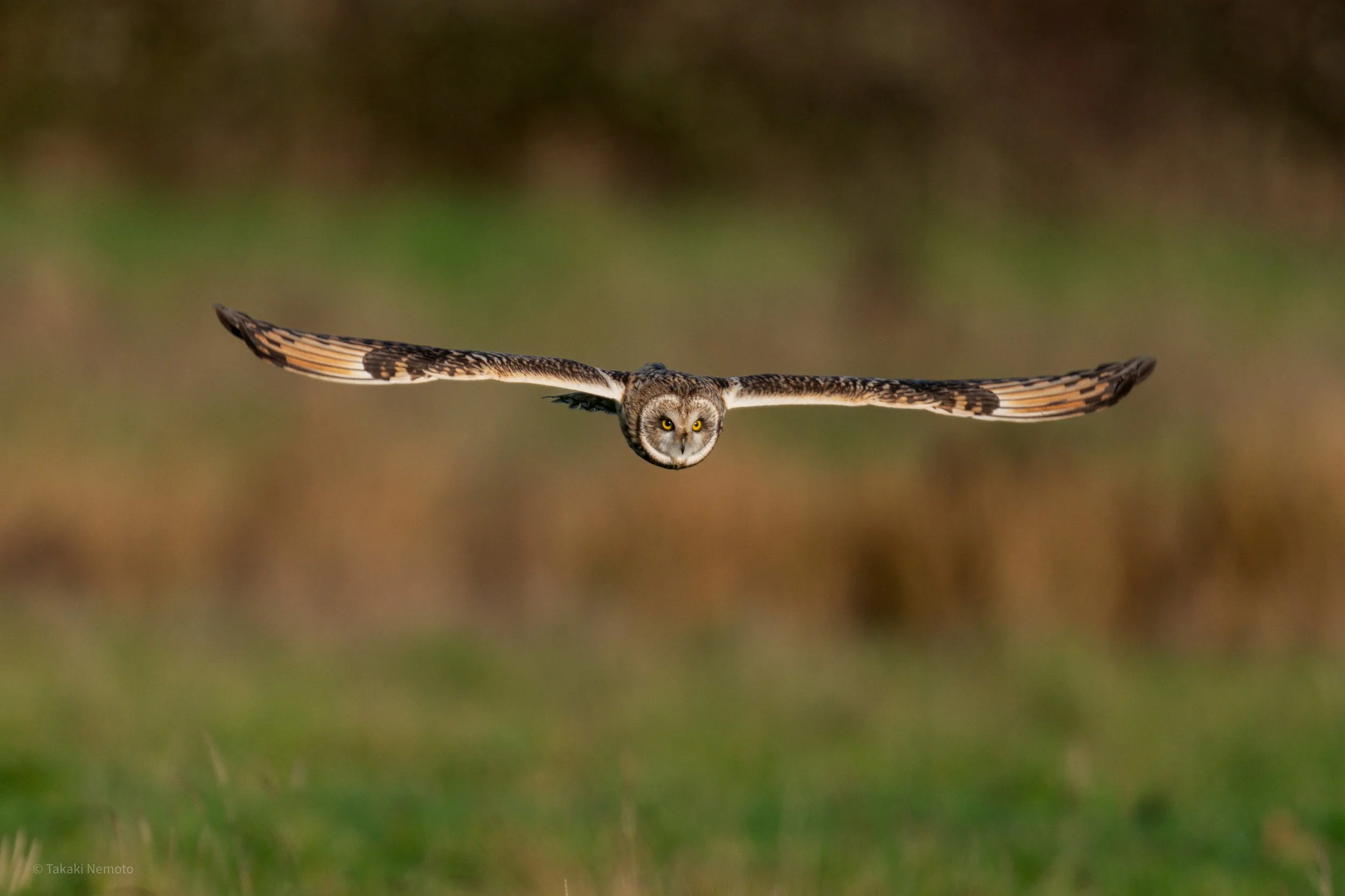
One-track mind….
I think it’s very natural to assume that given their bright yellow eyes, short-eared owls use their visual to hunt their prey. But in reality, they rely on their hearing to locate its prey in the grass so that they know precisely where to pounce. See the following sequence for how it does it.
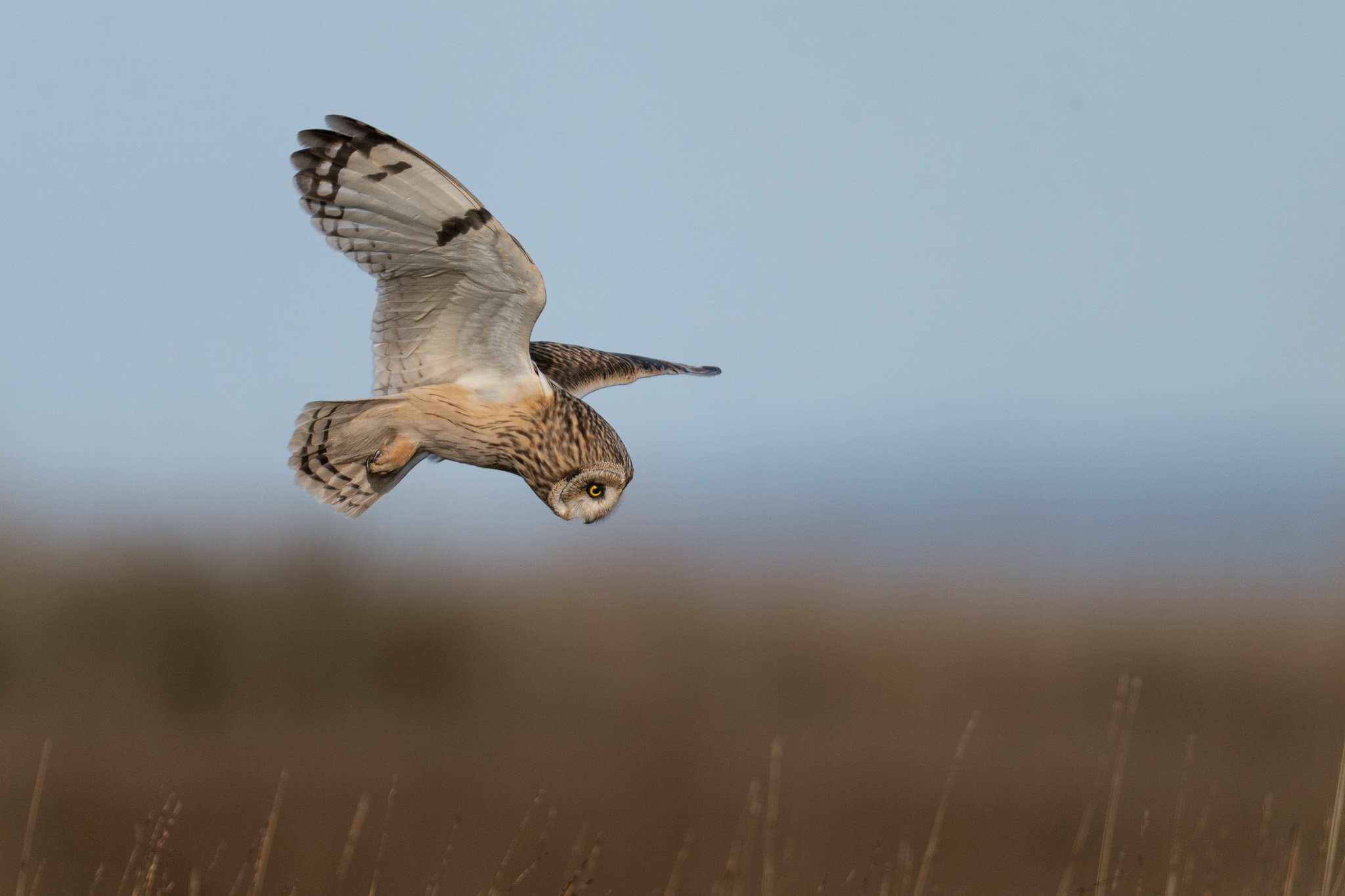
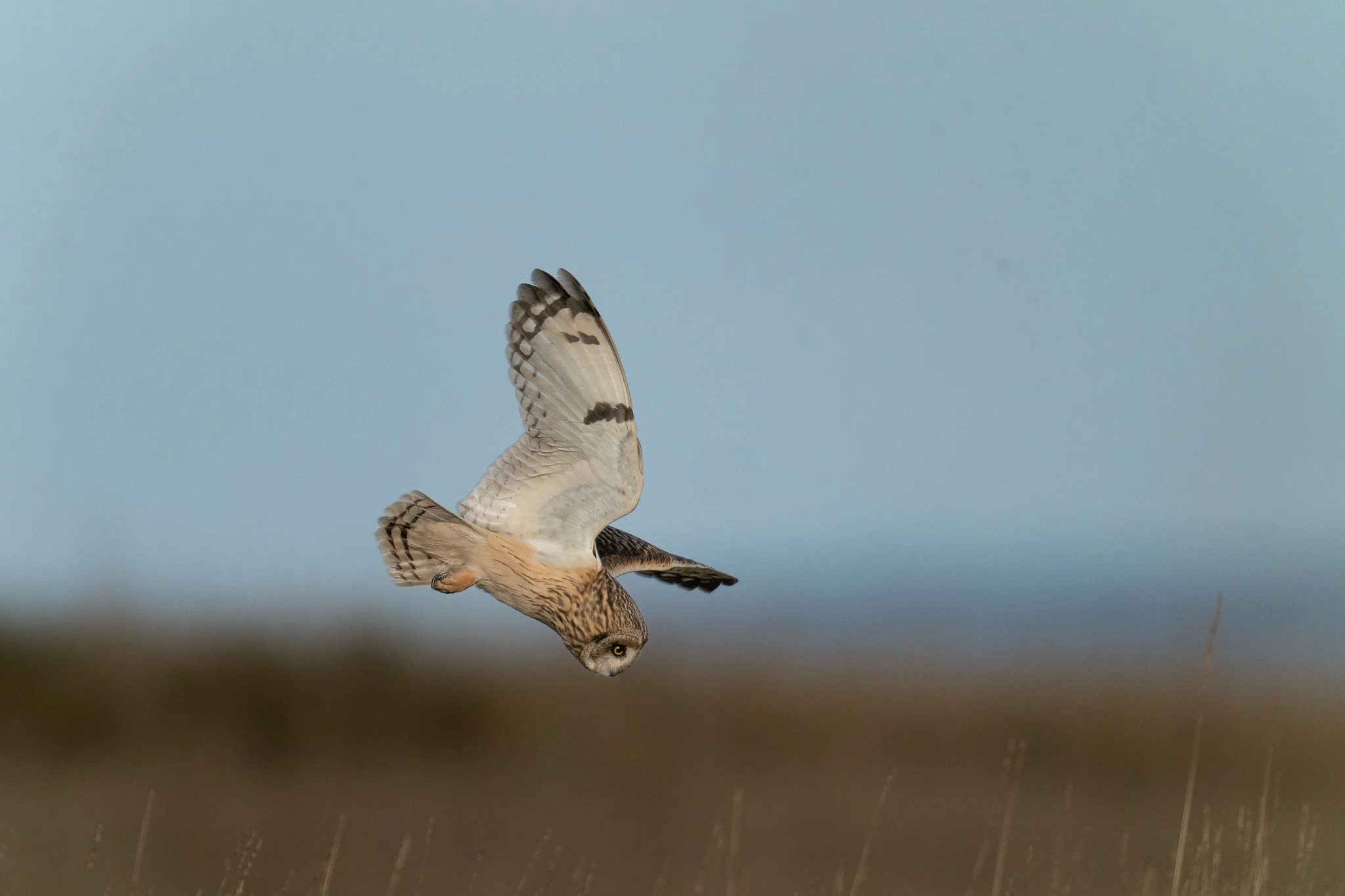
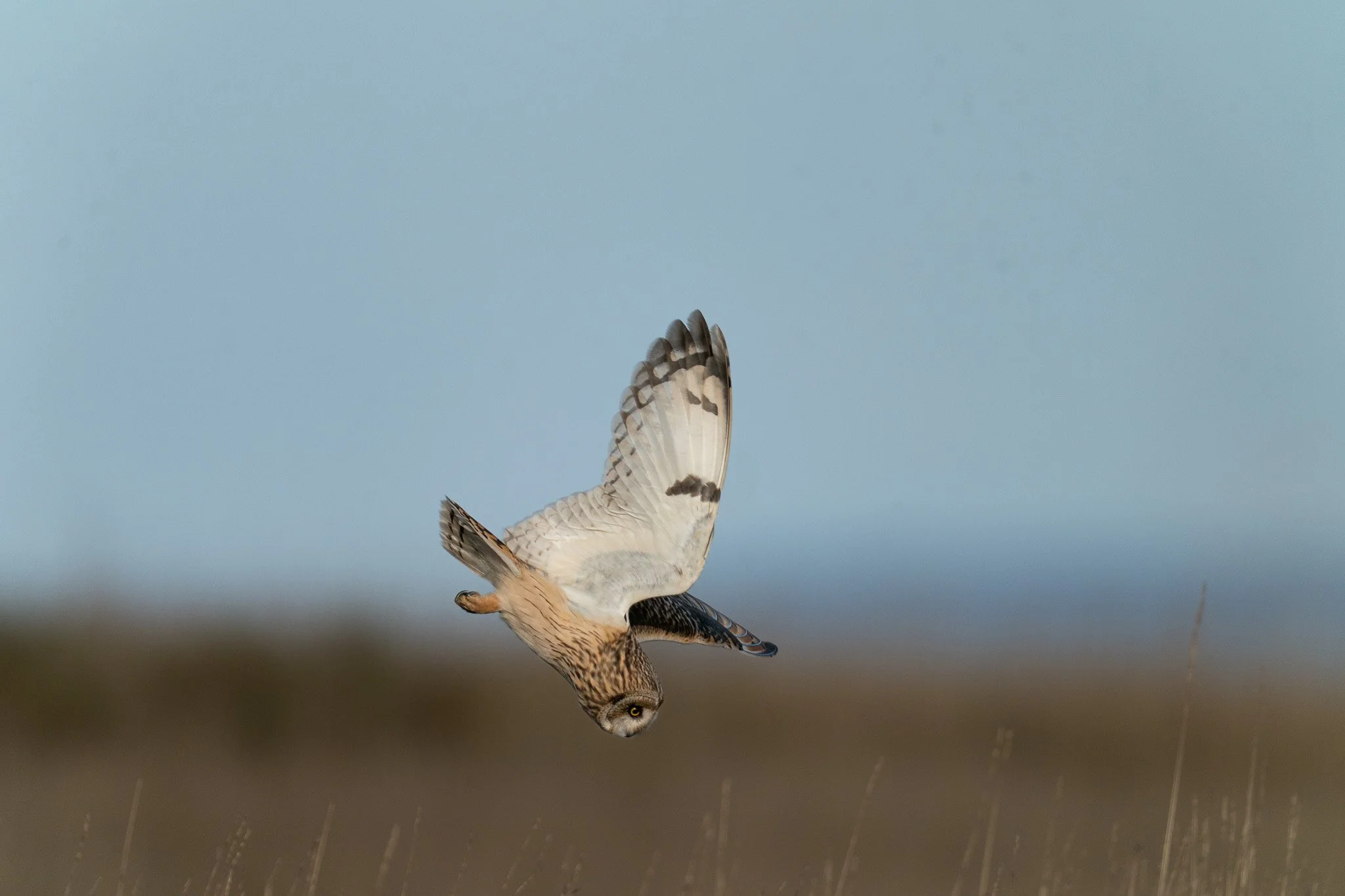
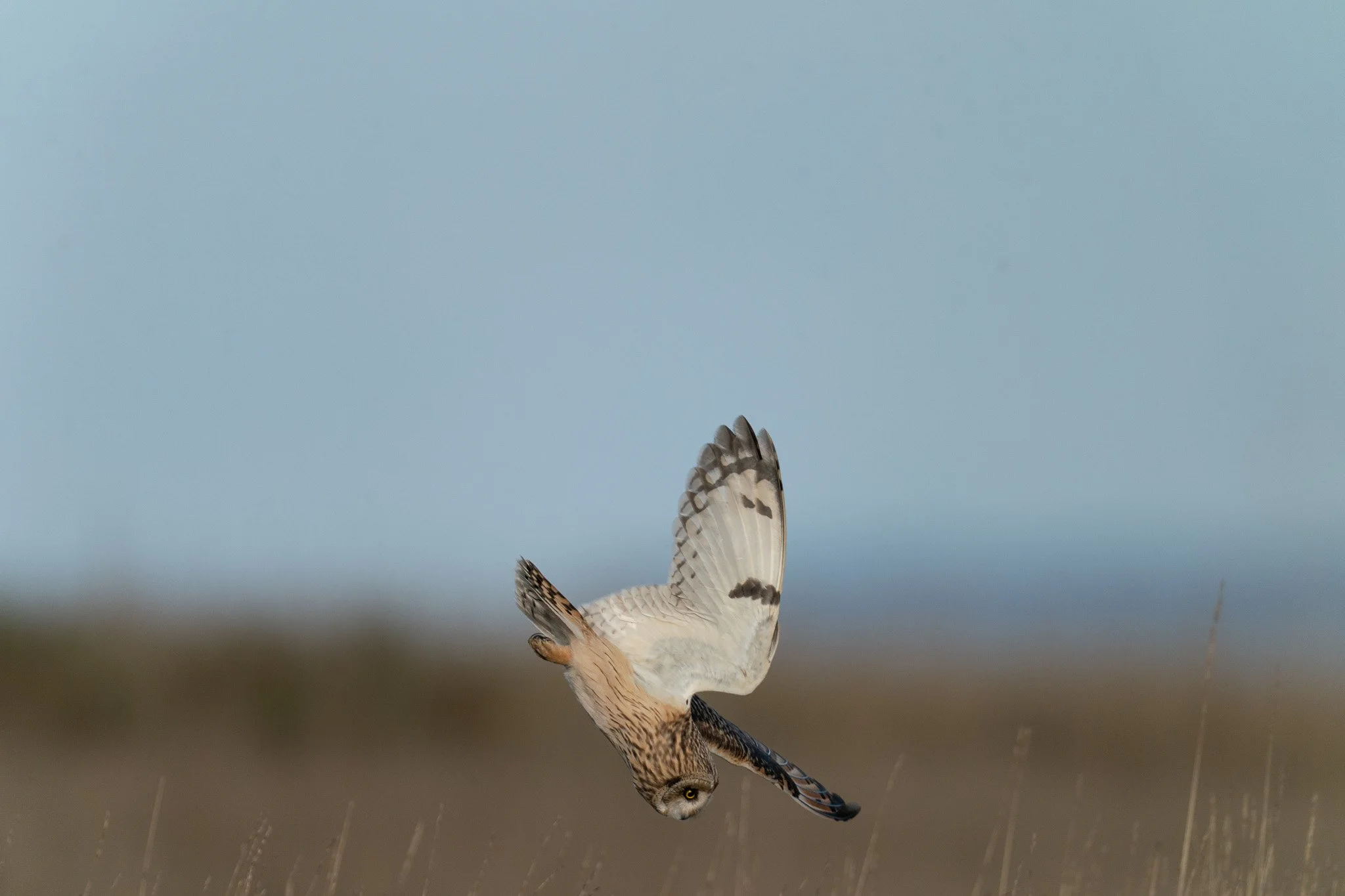
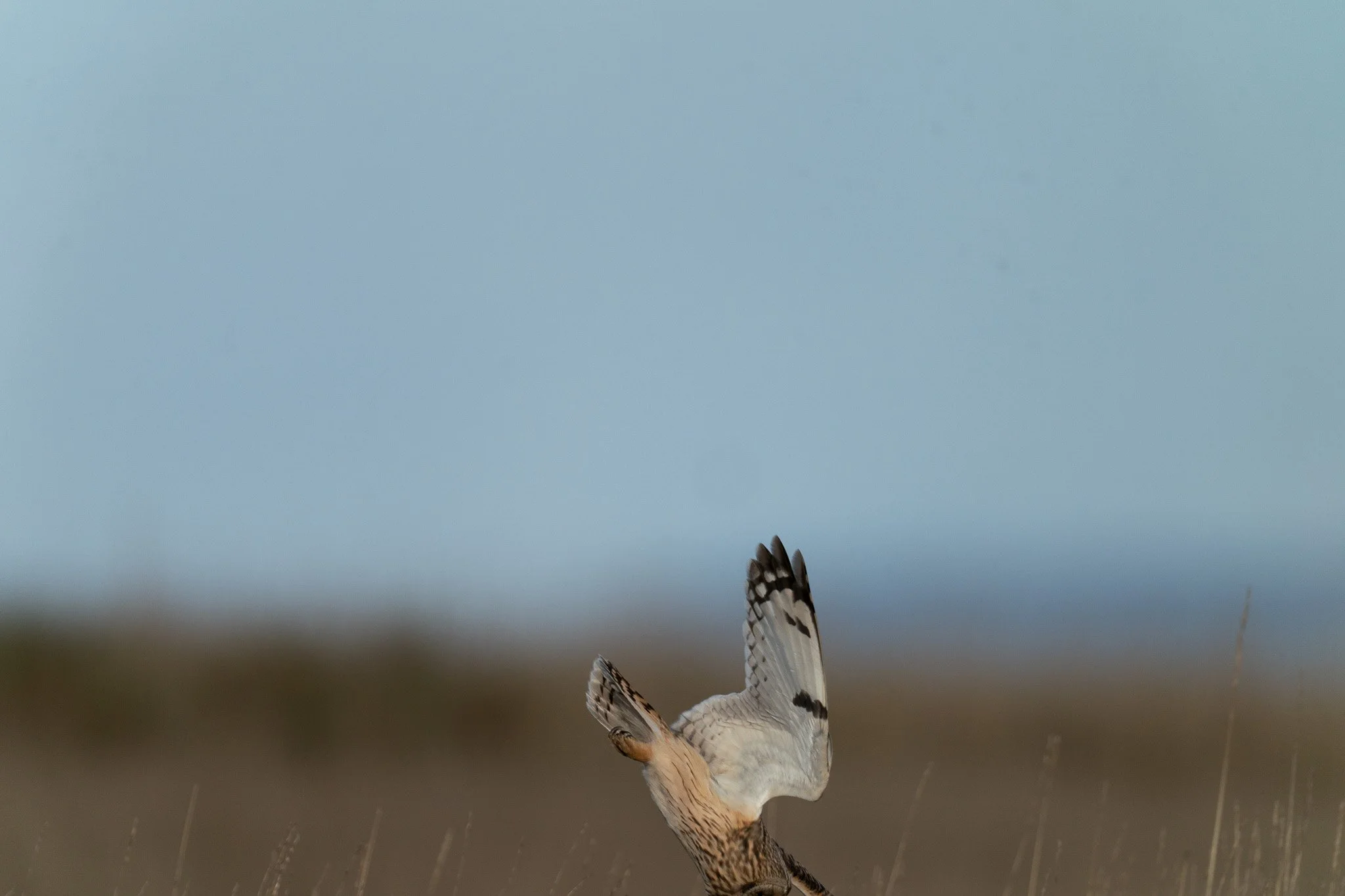
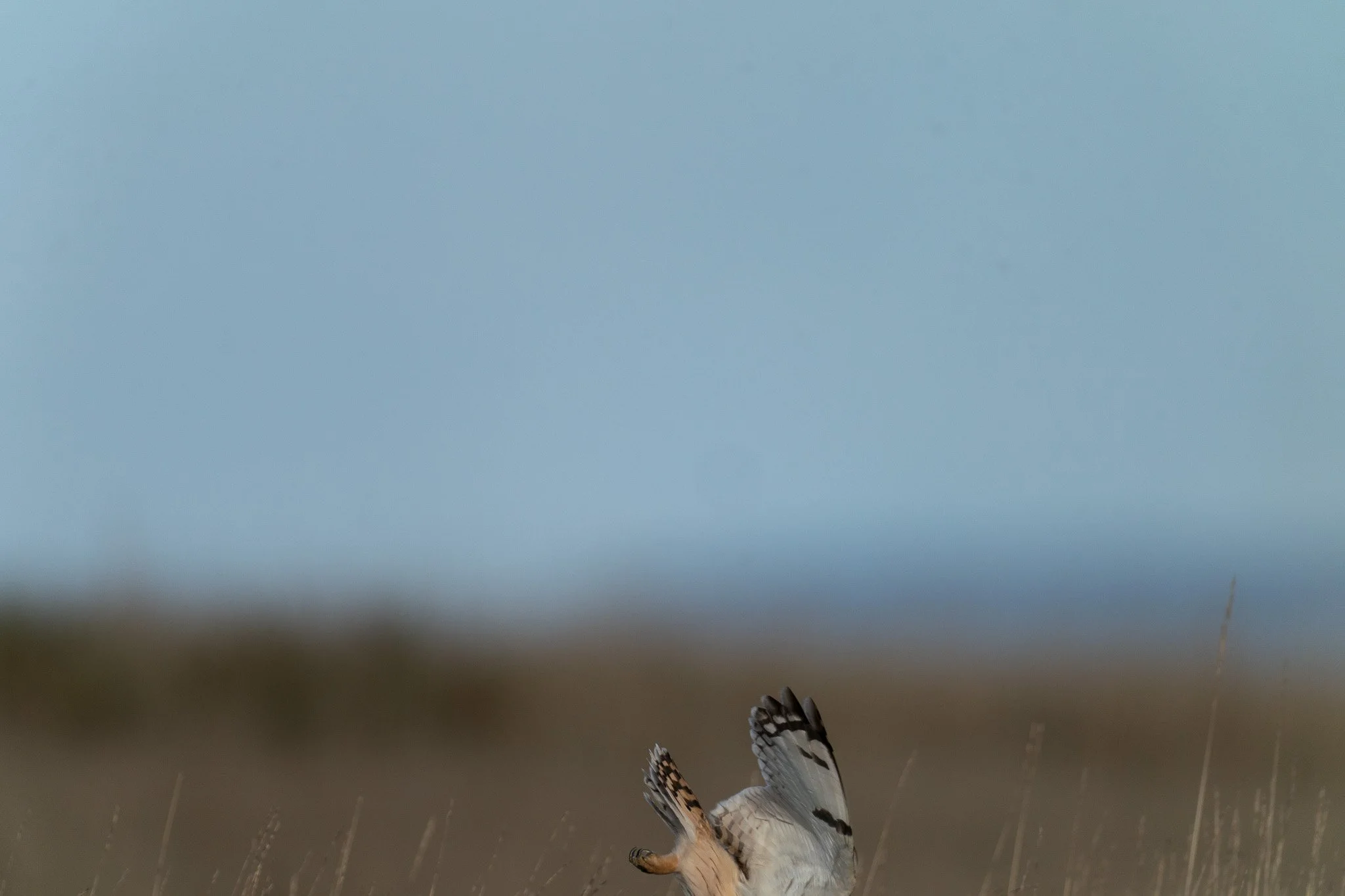
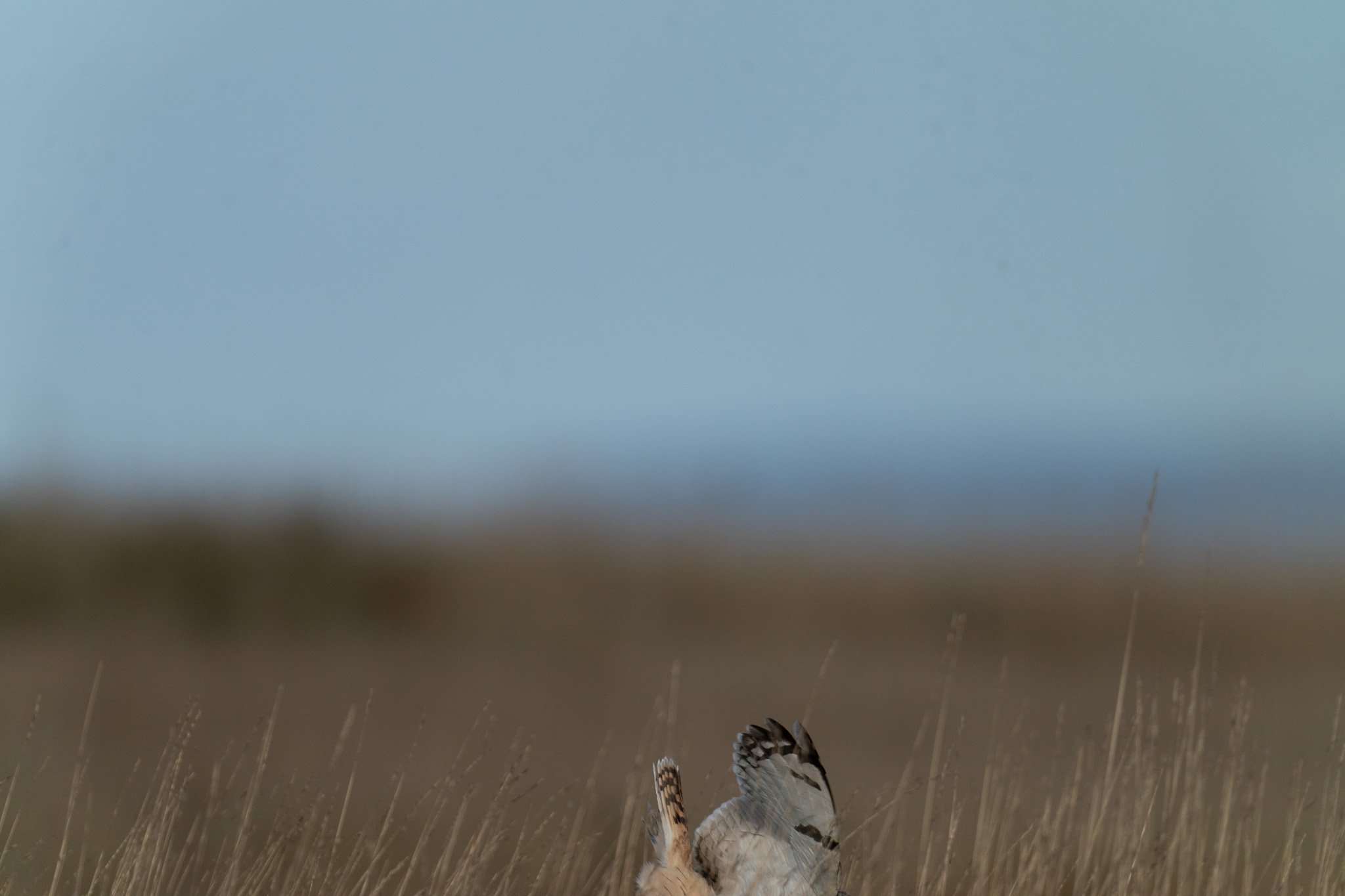
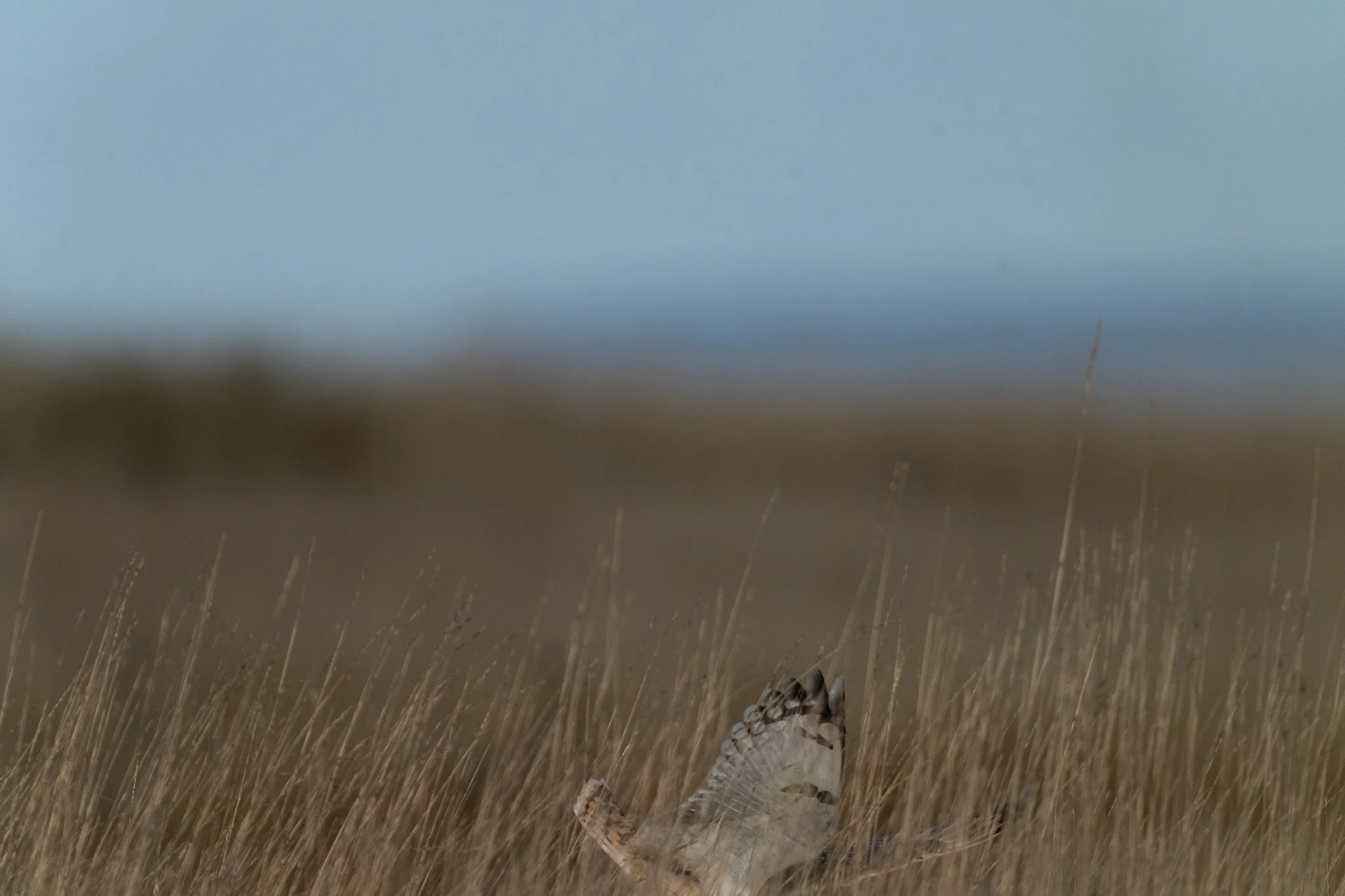
In this instance, the owl successfully caught a vole. It looks a little shaken and nervous looking up at the sky as if to check for something. This is because the owl is vigilant - food snatchers such as kestrels could swoop in at any moment, to steal its prize.
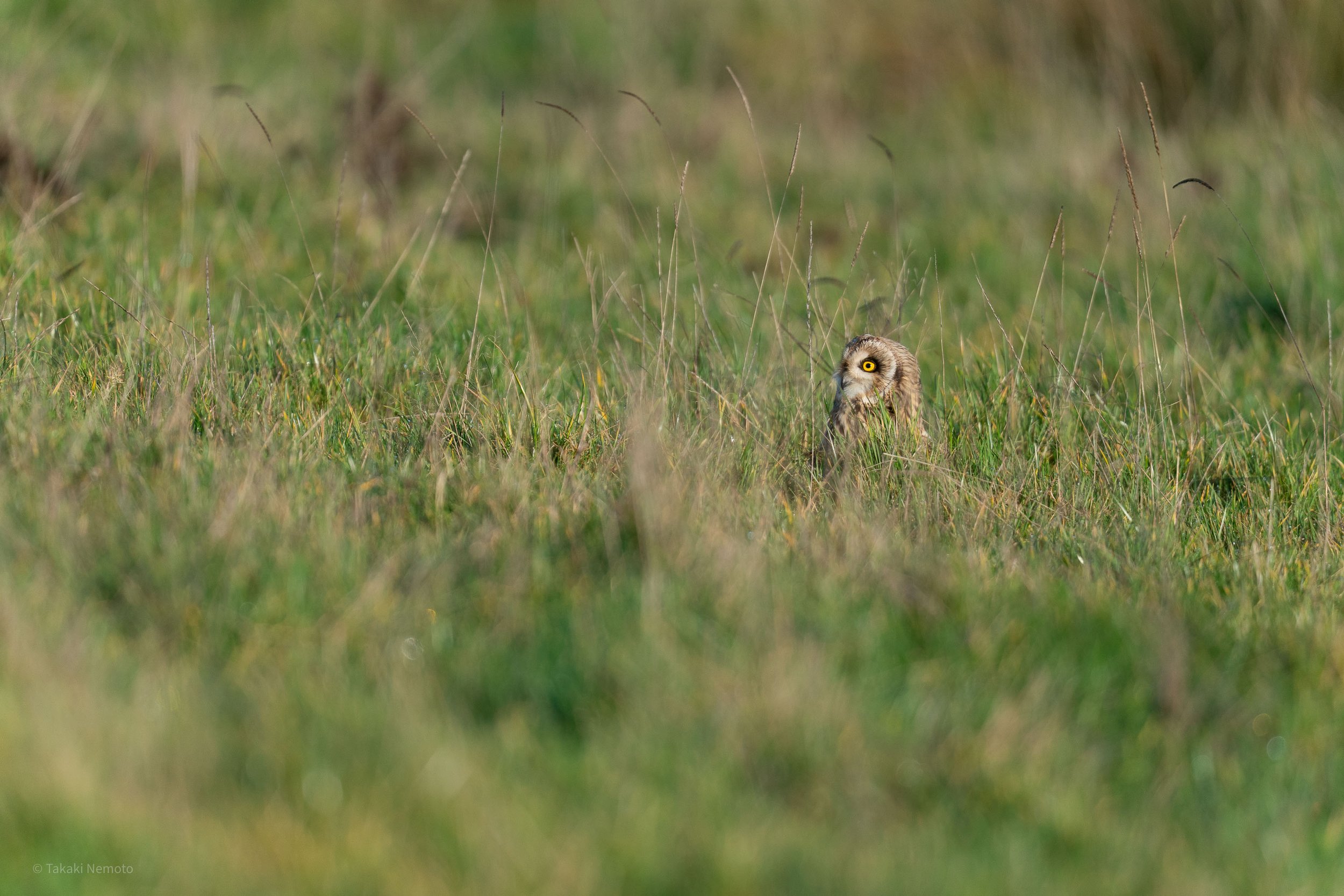
Even in the natural world, opportunistic thieves exist. One can never be too careful.
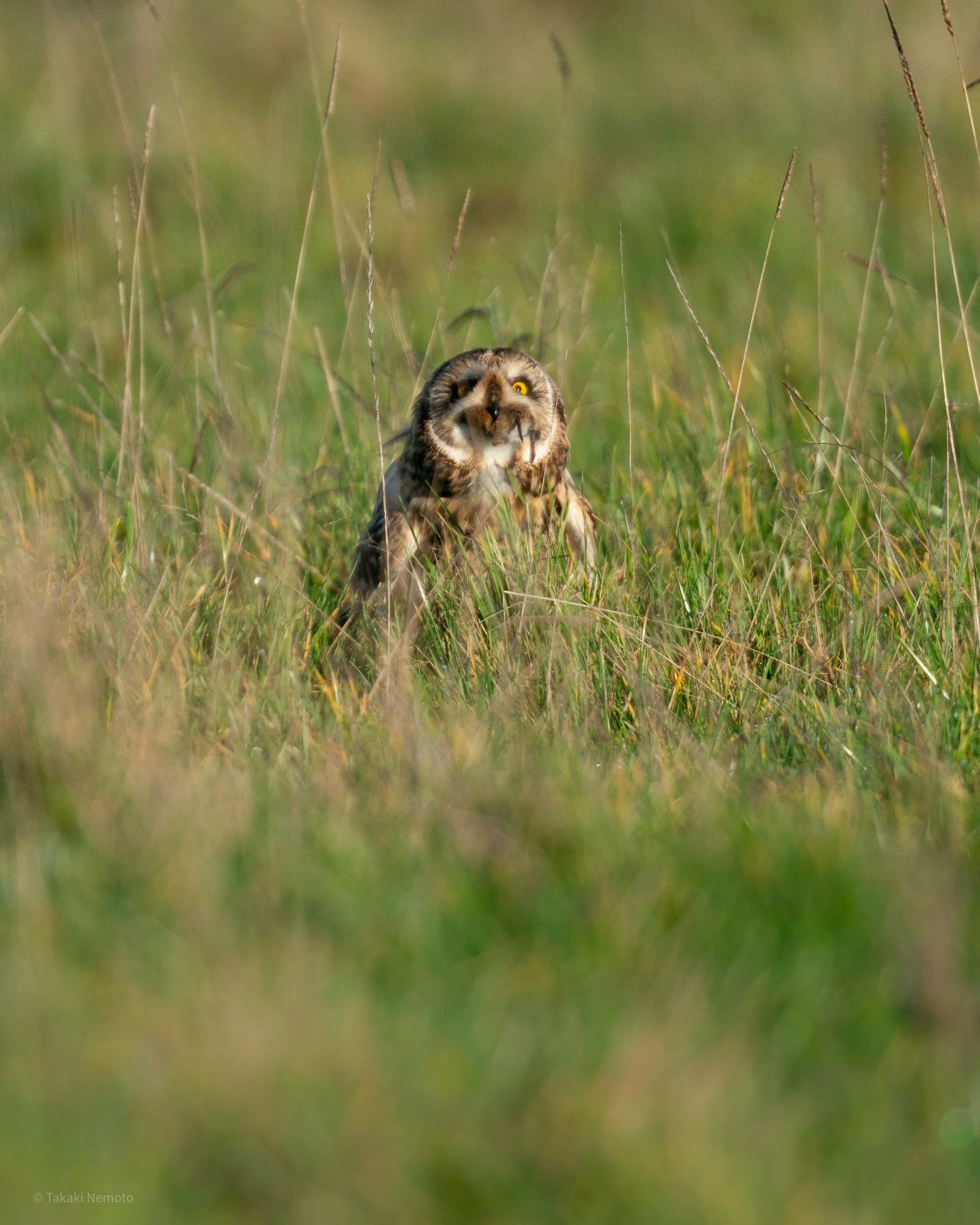
The coast is clear. Time to relish one’s catch!
Back at home, I went through my photo album and realised that this is the third winter I spent with the short-eared owl in Britain. My obsessiveness means during those three seasons, I amassed quite a large number of photos of the short-eared owl. Nonetheless, I cannot stop anticipating the arrival of this fascinating bird as the calendar approaches October each year. Is it because I am totally obsessed with the hope of taking a better shortie photo?
I had this conversation briefly with one fellow photographer and he said jokingly ‘That’s because you’re greedy!’ and we both laughed.
There is a grain of truth in it, but there’s more than that, I think.
In one’s lifetime, how many sunny days will we have seen before we kick the bucket? Just because we have seen a certain number of sunny days, it doesn’t mean that we one day get tired of them. It’s an eternal yearning built within us all.
I guess it’s rather similar with the short-eared owl, too. I just simply yearn for this magical seasonal event to happen each winter, as if that comforts me. And watching them glide along gracing the otherwise unglamorous arable land also gives me joy and hope that excitement could happen even in the most mundane and ordinary places.
After all, isn’t it what keeps us going?